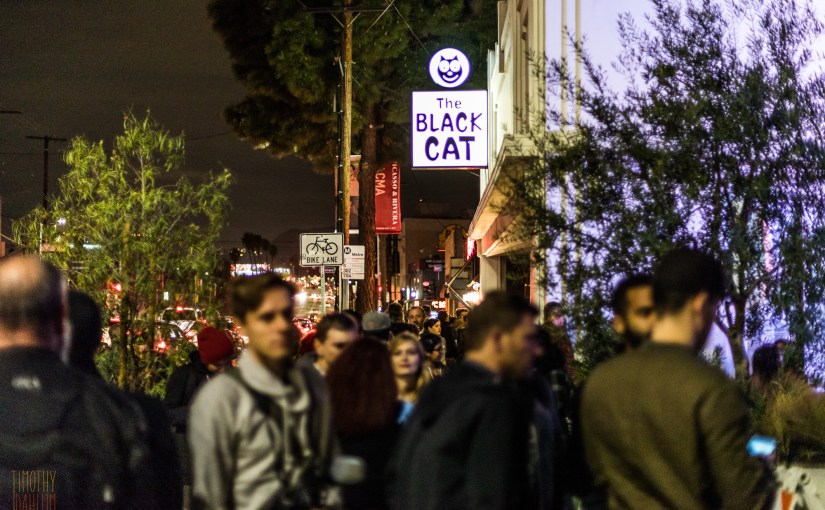
One of the defining moments in the early LGBT movement was the protest at the Black Cat Tavern in the Silverlake district of Los Angeles on February 11, 1967. The protest was sparked by the homophobic sentiment and brutality of the police, and ended in a riot. After some arrests were made for assault and public lewdness, men kissing in public, the police also beat several patrons of the tavern. The New Year’s Eve raid was was driven by the homophobic state legislation that made it illegal for members of the LGBT community kiss or engage in sexual acts (this included in the privacy of your home too), or wearing clothing that didn’t meet their socially defined gender role. The police action spread to another bar across the street, where several people were reportedly beaten unconscious by the police. After the New Year’s Day raid and riot, there was a public protest held by several hundred people organized by two civil and LGBT rights organizations , and they were met by squadrons of armed policemen. All of this occurred two years before the Stonewall riots in New York, fueled by the Counterculture movement that was strong in Los Angeles.
The event this last weekend was completely the opposite. The police, mayor, councilmen, and city heads were there in support of LGBT rights, in memory of the injustice of 50 years ago, but also standing together and showing solidarity for all of the people that are marginalized or threatened by discrimination and any exclusionary practices. The night was full of positive and powerful speakers, actors, politicians, and musicians. Alexei Romanoff, one of the original protestors after the Black Cat raids fifty years ago, was there as a strong and iconic figure for the night’s rally. The idea of being able to openly give my husband a kiss on the same ground that fifty years ago would have resulted in us being beaten, brutalized, and arrested was both exhilarating and sobering. To know that we are beginning to have the freedoms afforded to other people, at least here in Los Angeles, while there are places in the world where we could be killed for walking down the street holding hands, let lone kissing, made me appreciate the amount of progress that has been made just in my lifetime. It reinforced in me the need to push forward, and keep striving for equality, increasing tolerance and removing exclusionary barriers that have not only tried to hold me back, but so many others because of their sexual preference, gender, skin color, beliefs, or any other perceived difference from the list of perceived othernesses that have been used to justify exclusionary movements.


 Timothy Dahlum