 Columnar basalt stands up to the constant wave action at Cape Nelson Conservation Reserve near the Great Ocean Road that runs along the southern coast of Victoria, Australia from Melbourne to Adelaide. This is the first of several prints I’ve been working on using selenium toning of the paper as a finishing and archival process. This is a scan of an 8×10 print on Ilford MGFB (silver gelatin) paper with selenium toning, shot on Foma Ultra 100 (Arista EDU) black and white film, with a Canon F-1 camera and a 135mm lens.
49th Annual Manzanar Pilgrimage

A Buddhist priest stands on the side of the memorial monument in the graveyard at Manzanar National Historic Site during the annual interfaith memorial service as part of the pilgrimage to the former concentration camp. This is a scan of an 8×10 work print on Ilford MGFB (silver gelatin) paper, shot on Foma Ultra 100 (Arista EDU) black and white 35mm film, with a Canon F-1 camera and a 135mm f/2.8 lens.
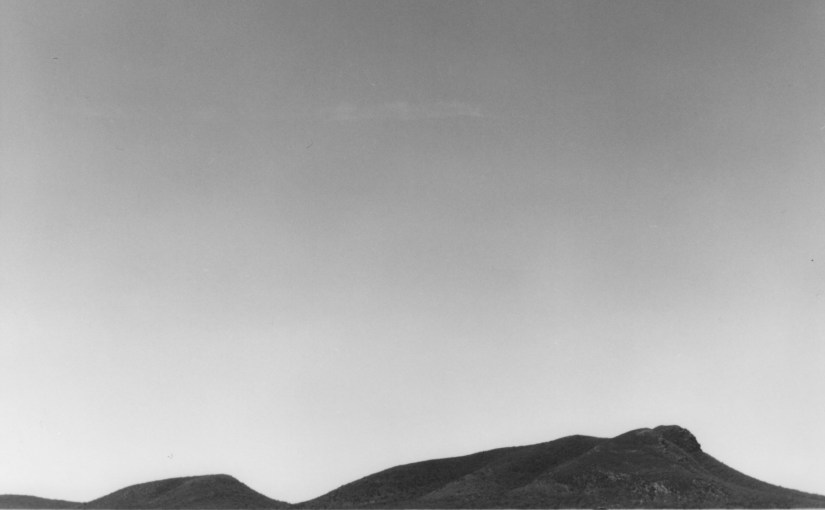
First Large Format Print from Australia
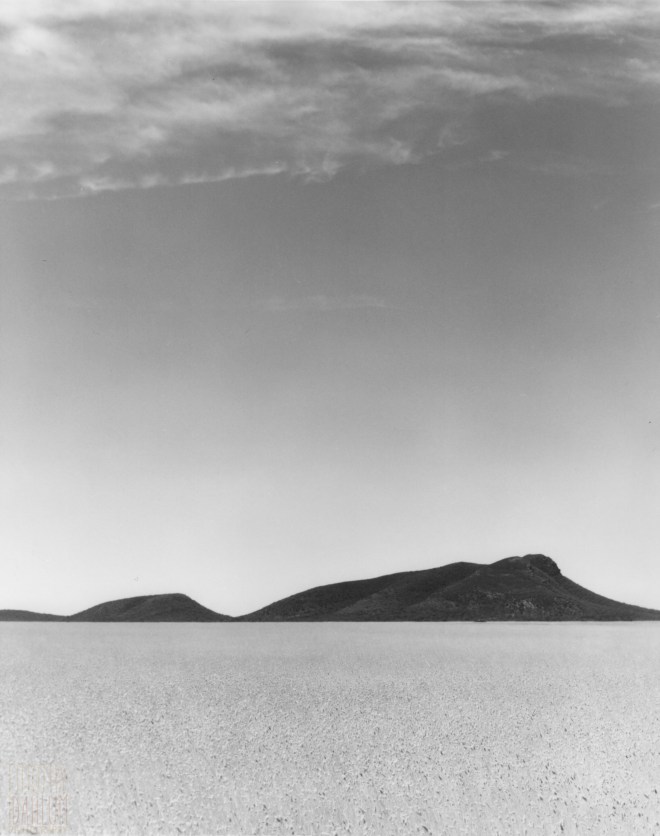 This is the first print I’ve made from the first exposures I shot on the Intrepid 4×5 camera I received the day before we left for Australia earlier this year. It was a fun learning on the fly once I got to Australia and attempted to start putting everything I’d learned on other camera systems before I left. Each large format camera and lens combination has its own quirks and learning curve. The Intrepid is a light and sturdy field camera made in England and made of wood primarily, this allows for extreme portability and wanting to haul it up mountains or down cliff sides (unlike its studio camera cousins that weigh a ton and are large and bulky).
We were on our way to the Gariwerd (Grampians National Park) from the southern coast when we got our first glimpse, across fields of grain, of the southern ranges of the Gariwerd mountains. This location was so different from where we’d spent the previous couple of days along the coast, here it was still and hot, which was conducive to photography with a small box kite (I’d been unable to shoot along the coast because the winds were so intense that the camera would have vibrated or been torn apart). Here I only had to contend with the stiffing heat while I stood under a dark cloth sweating, steaming up my glasses, being nibbled on by the local insects, and occasionally attacked by large grasshoppers crawling up my jeans.
This field along a small road in the backcountry was a quiet spot to take the time necessary to set up, compose, and expose four sheets of 4×5 black and white film, each with different filtration (yellow, orange, red, and a circular polarizer) to get a balance of the sky, the mountains, and the grain field in the foreground. Making sure to shoot all four filtration approaches meant I would come away with at least one good photo, with the understanding that I may not have the chance to return to that spot again. When I began shooting filtration for the sky was necessary because there weren’t any clouds at all, over the course of an hour or so that I was there and preparing, the weather began to change as the afternoon drug on and a few wispy clouds appeared making the composition more interesting.
I ended up using my Canon F-1 35mm camera as my meter. This was the expedient route since I already knew how the meter worked with the Foma Ultra 100 film (at least in 35mm roll film form which is close enough), and that I could at least get predictable results when I got back several weeks later and developed them in the lab. I’ve now switched to a separate metering system and calibrated my sheet film separately from my 35mm process in order to get the best from the negatives on my current paper emulsion.
This is a scan of a print on 8×10 Ilford MGFB (silver gelatin) paper, shot on Foma 100 (Arista EDU) black and white 4×5 film, with an Intrepid 4×5 Camera and a 210mm f/6.8 lens.
Watching a bald eagle watch me

While driving along one of the levees on the west side of Tule Lake we were able to get right under this Bald Eagle for long enough to capture three images on film before it took off, most of the other raptors we’d seen near the road would leave well before we got close. This is a scan of an 8×10 work print on Ilford MGFB (silver gelatin) paper, shot on Foma 100 (Arista EDU) black and white film, on a Canon F-1 coupled to a 300mm f/2.8 lens.
Mid-morning walk at Tule Lake
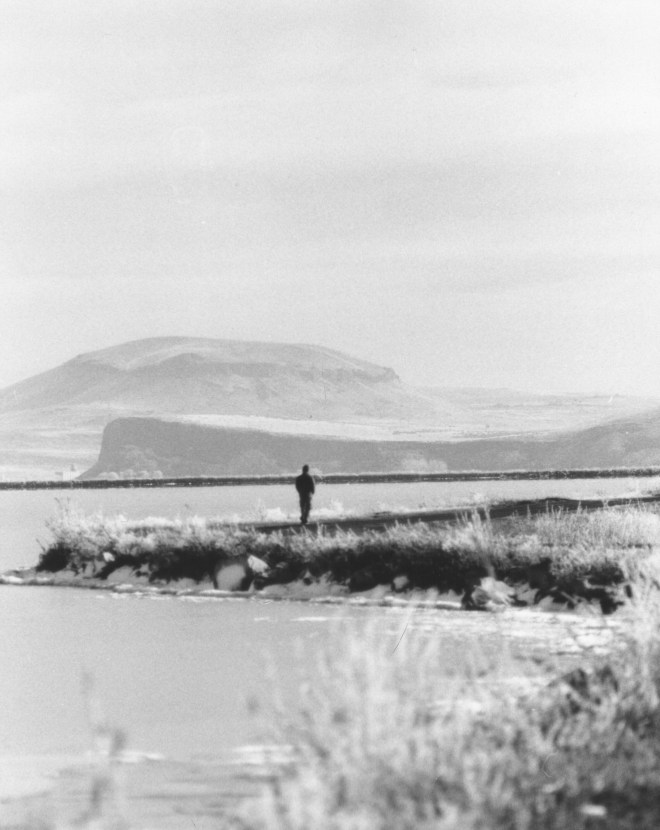
Mid-morning at Tule Lake, Joaquin had walked ahead of the car so we didn’t startle some birds he was trying to photograph. This view wouldn’t have been possible an hour beforehand, a thick grey fog clung to the lake surface for most of the morning, but cleared suddenly and completely changed the views on and around the lake. This is a scan of an 8×10 work print on Ilford MGFB (silver gelatin) paper, shot on Foma 100 (Arista EDU) black and white film, on a Canon F-1 coupled to a 300mm f/2.8 lens.
Sand tufa at sunset
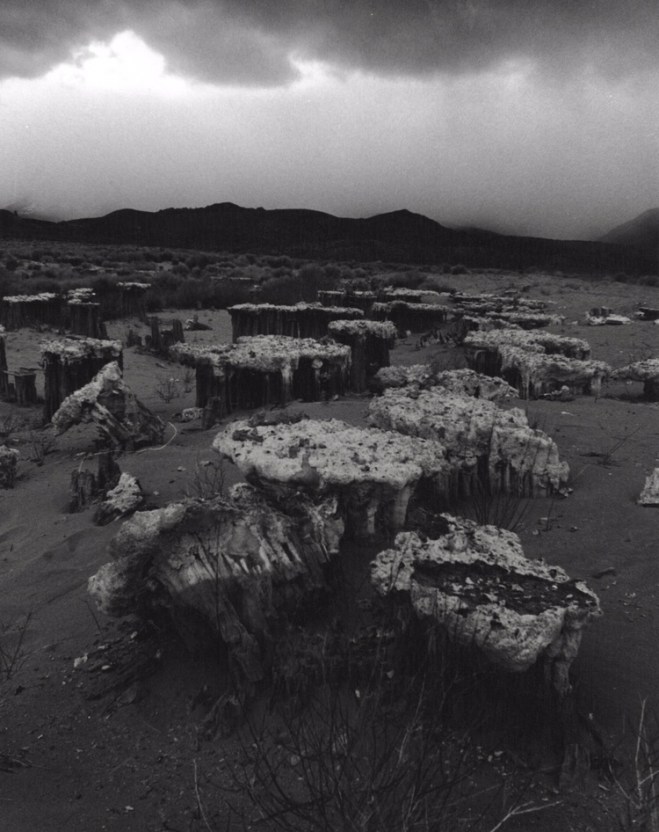
A cold and gray sunset amongst the sand tufa at Mono Lake, we were able to arrive just before sunset to scout in the dying light for some compositions. The very low and indirect light works well with the bright white of the tops of the tufa that are normally overexposed in direct sunlight. This is a scan of an 8×10 work print on Ilford MGFB (silver gelatin) paper, shot on Foma 100 (Arista EDU) black and white film, on a Canon F-1 coupled to a 28mm f/2.8 lens.

2017 total solar eclipse in Wyoming
The 2017 total eclipse that cut a path across the US was the first time I ever experienced a total eclipse. I’ve read about them, gone to partial and annular eclipses, seen total lunar eclipses, but this was a first for me. No matter how much I prepared myself for what was going to happen nothing could have prepared me for the feeling in the actual moment. The feeling of something being amiss as the moon starts to pass in front of the sun and alter the light almost imperceptibly, the change in the wind and the dropping in temperature (made even more acute by being at around 7,000 ft in altitude on the upraised vast plateau that was a former seafloor, making the air thinner and exceptionally low humidity), and the absence of people (normal for this part of Wyoming) added to the ethereality of the moment. I quickly chose the three locations of my cameras and set them recording so I could stand and observe and feel the changes in the environment.
The moment of totality was so very beautiful, it doesn’t matter if I’ve seen images and video of it before, its one of those things that is so hard to capture or convey. The way the light changes, seeing the halo of ionosphere and corona of the sun protruding around the edges of the moon, the odd pinkness to the threads of corona, it felt almost like sunset or sunrise, but not quite, the angle of the light was all wrong, and the sunset/sunrise was equal on all horizons. The moment the sun popped a corner past the moon at the end of totality, it was like someone shot up the most insanely bright and actinic colored flare ever produced. The landscape was just lit up in an oddly blue-pink light that made it feel like I was standing on another planet (the oddity of the landscape in that part of Wyoming and the absence of any other human besides my husband added to the effect), as though we were transported momentarily to some fantastical science fiction setting.
We are already planning our future trips to other total solar eclipses.
We started planning for this trip many months in advance, creating a collaborative map of possible locations for the best viewing, something beautiful to have in the foreground (difficult because of the high angle of the sun during totality), and hopefully a lack of people so we could have unobstructed views and be able to experience the moment without distractions. We settled on a stretch of land within the band of totality between Riverton and Casper, Wyoming. The question was whether or not there would be too much cloud coverage and then we would have to move quickly to wherever it would be clear. Luckily it was clear enough along the eastern portion of the line of totality we’d chosen as our best bet.
This video is a a time-lapse from three different cameras at three different focal lengths I set up around our viewing spot off of Poison Spider Road between Riverton and Casper, Wyoming. The first is several hundred stills at 24mm focal length (about 38mm on a full frame) on a Canon T3i, the second is video shot at 16mm focal length on a Canon 5D MkII, and the last is from a GoPro Hero4 Silver (about 14mm focal length). I wasn’t sure if any one of them would work or fail, but I wanted to have a setup that allowed me to start it well before the beginning of totality and then walk away and enjoy the totality without having to worry about it, you can see Joaquin moving about and triggering his camera to take photos just as totality begins.
Video of 2017 Total Solar Eclpise in Wyoming

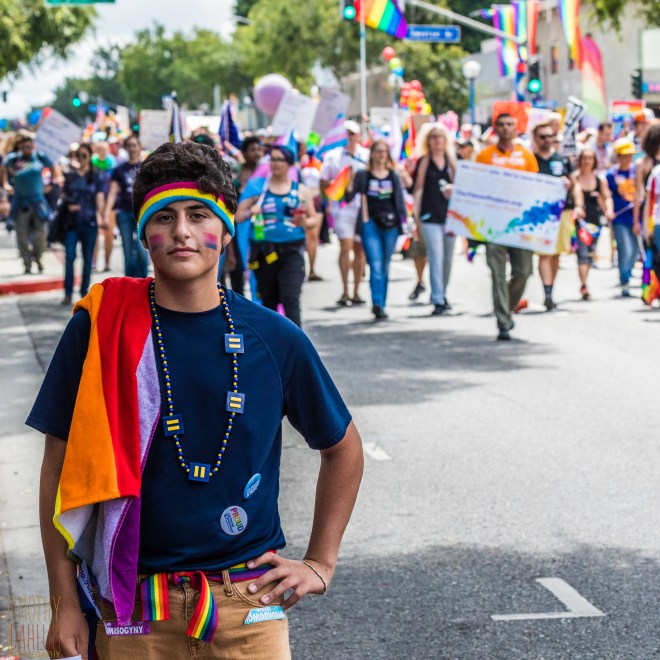
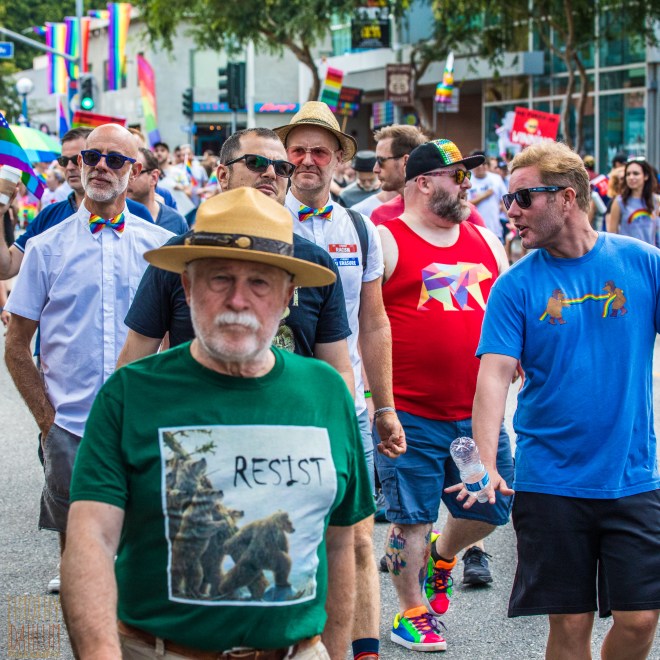
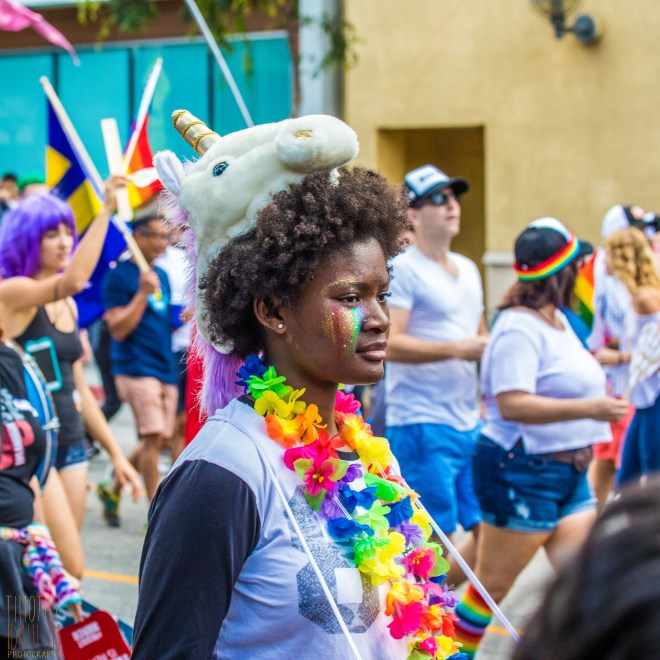
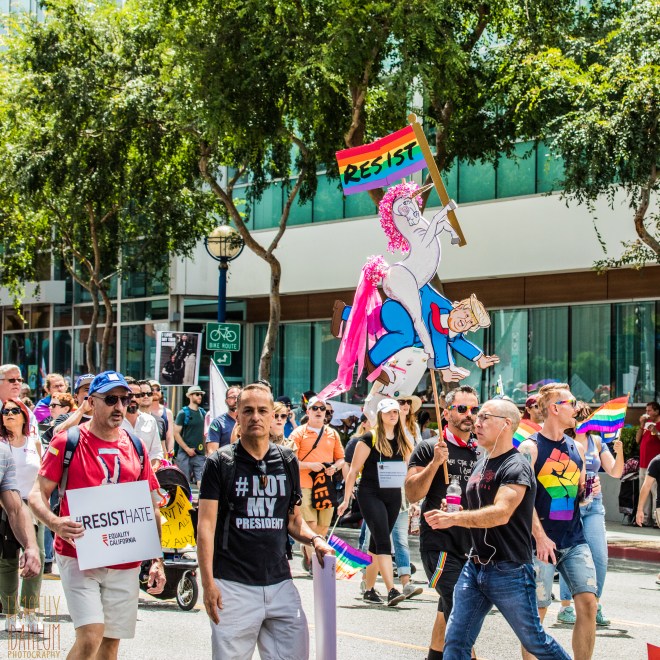
Los Angeles Pride and Resist March
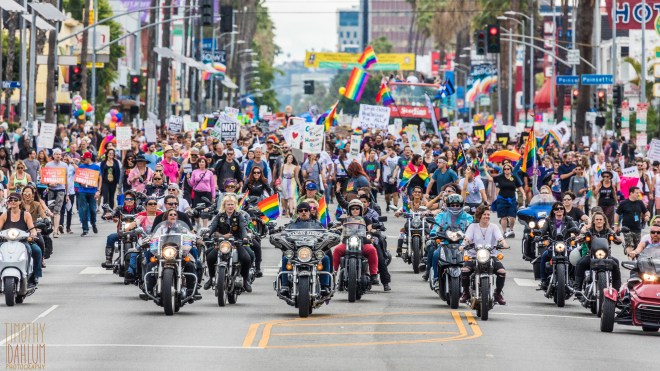
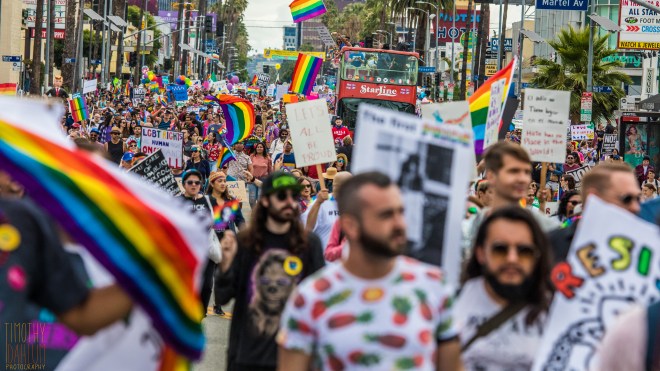
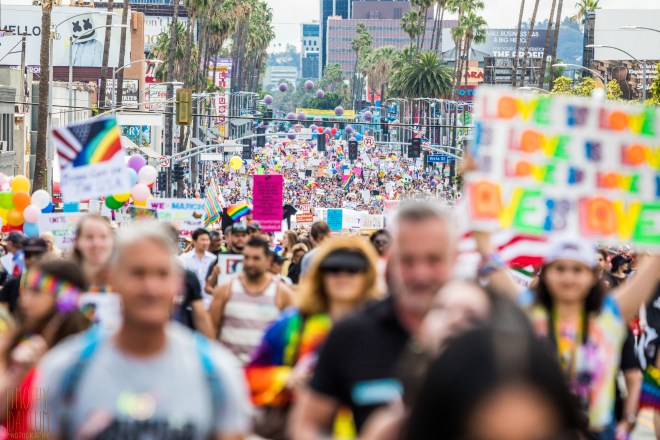
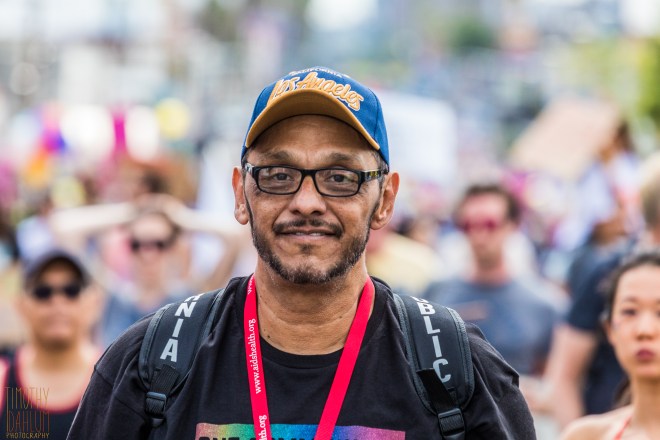
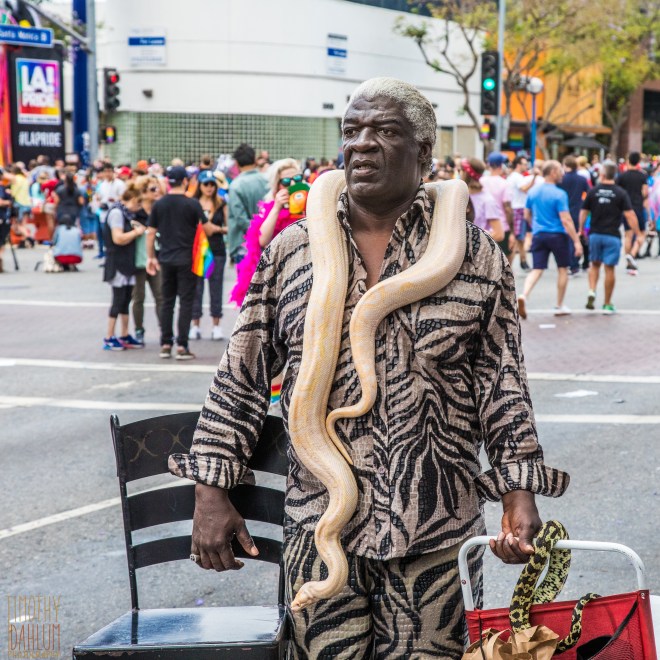
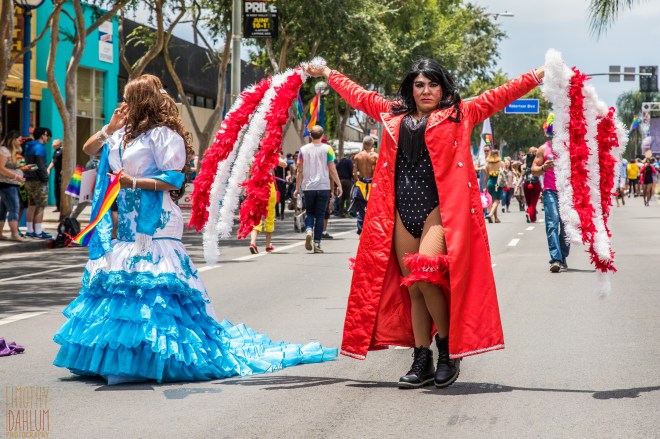
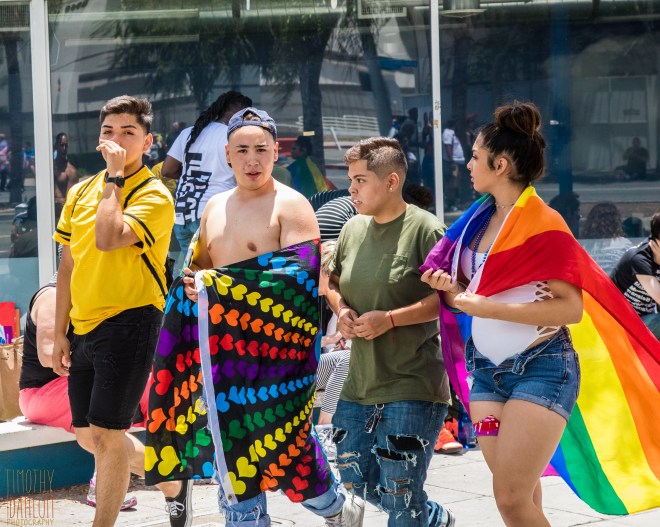
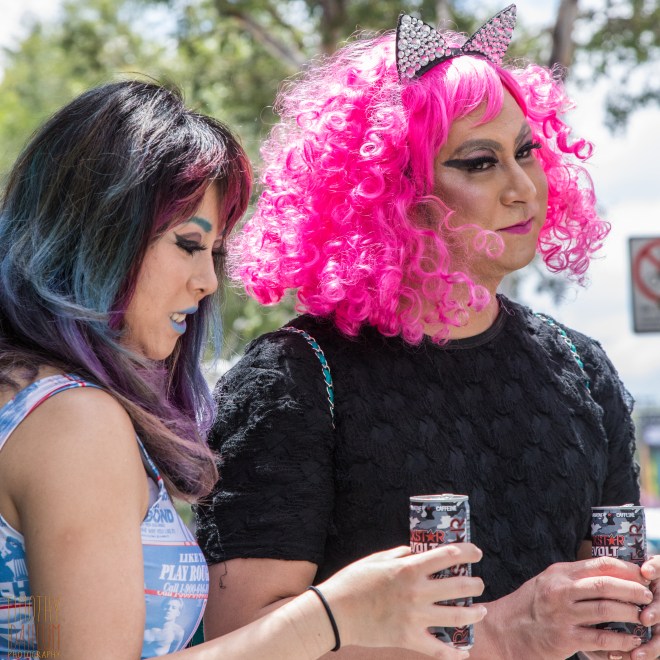
LGBT Pride month is almost over, but the need to stand up for everyones human rights has not gone away. Here are my favorite photos I took at the Los Angeles Pride and Resist March illustrating the breadth of humanity standing together, letting each other know we have each others backs. The long walk from Hollywood and Highland to the stages set up for the rally in West Hollywood was a peaceful one with throngs of people stretching along the route. The view along Sunset Blvd as I looked back to see the people stretched out along the mile between La Brea Ave and Fairfax Ave was inspiring, knowing that the sea of humanity before me were all there early on a Sunday morning so they could march in solidarity.











March for Science Los Angeles, Gallery
The March for Science in downtown Los Angeles last Saturday was an interesting day full of colorful people, public outreach, and speeches. It was both a public display by scientists to drum up support from the public, and by the public in support of science. The odd and interesting blend of pop culture and the sciences led to some pretty cool signs and outfits. Here are the favorites from what I saw:


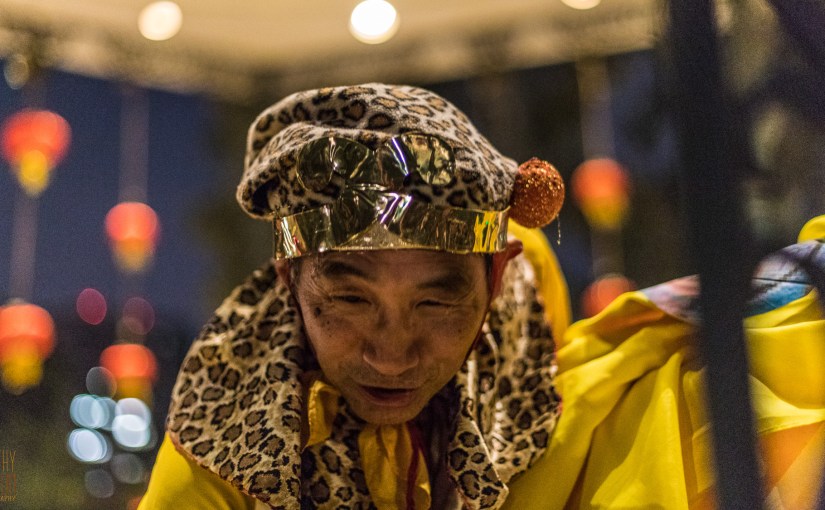
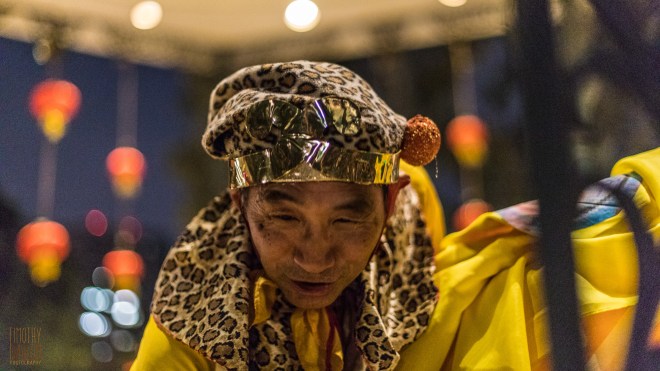
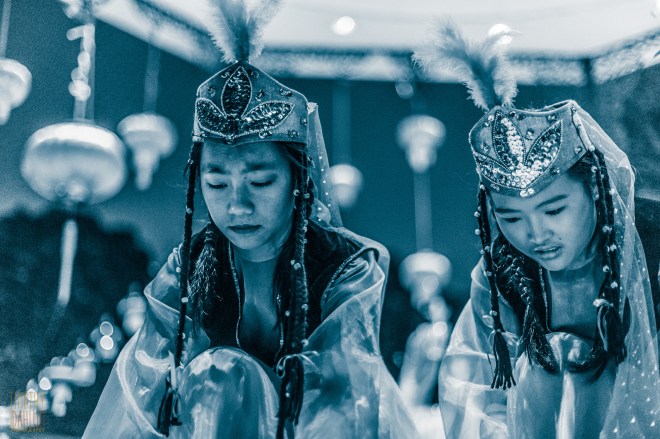
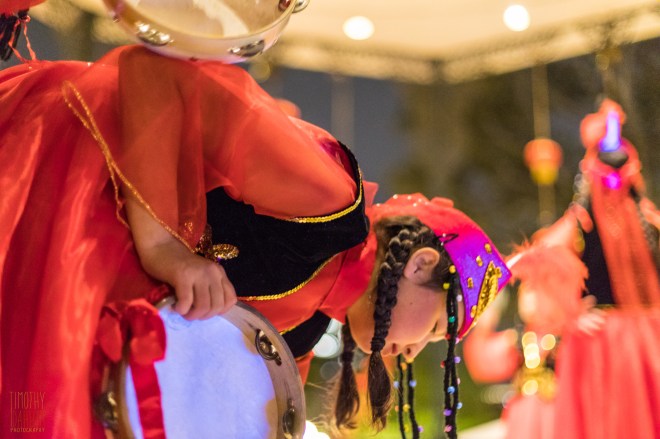
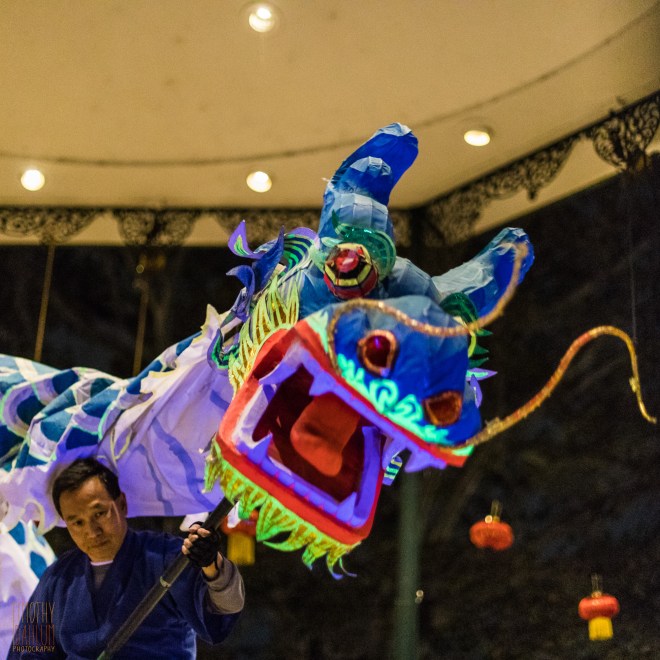
Lantern Festival, Impromptu Stageside Portraits
The 15th Lantern Festival held by the Chinese American Museum was a day of festivities in the museum and spilling out into the plaza and onto the stage of the Pueblo de Los Angeles Historical Monument. I wandered around for the afternoon, taking in some performances, trying out the steamed buns truck (because who doesn’t like some hot steamy buns?), checking out the exhibits at the Chinese American Museum. The crowds were eclectic like the smattering of small museums of the different cultural groups that have settled here over time.
As the sun set I found a perfect place to set myself up stageside for shooting the performances. I placed myself in a small break in the hand railing where the performers ended up placing some of their props. What ended up happening was that I was able to create impromptu portraits of some performers as they were exchanging props or waiting in the open stageside space. Of course, there had to be a photo of the last dragon of the day, all lit up from below by black-lights along the edges of the stage.

 Timothy Dahlum